
By using our website, you agree to the use of cookies as described in our Cookie Policy
Blue Crabs, Hermit Crabs & Other Sea Life at Crab Island
Crab Island isn't an island. It's a sandbar off Destin that sits just below the surface, and it's crawling with life. We're talking blue crabs darting across the sand, hermit crabs swapping shells like it's a garage sale, and a whole crew of creatures most people never bother to notice. The water's shallow, the current's gentle, and the Gulf decides what shows up on any given day. If you're wading through without watching your step, you're missing the show.
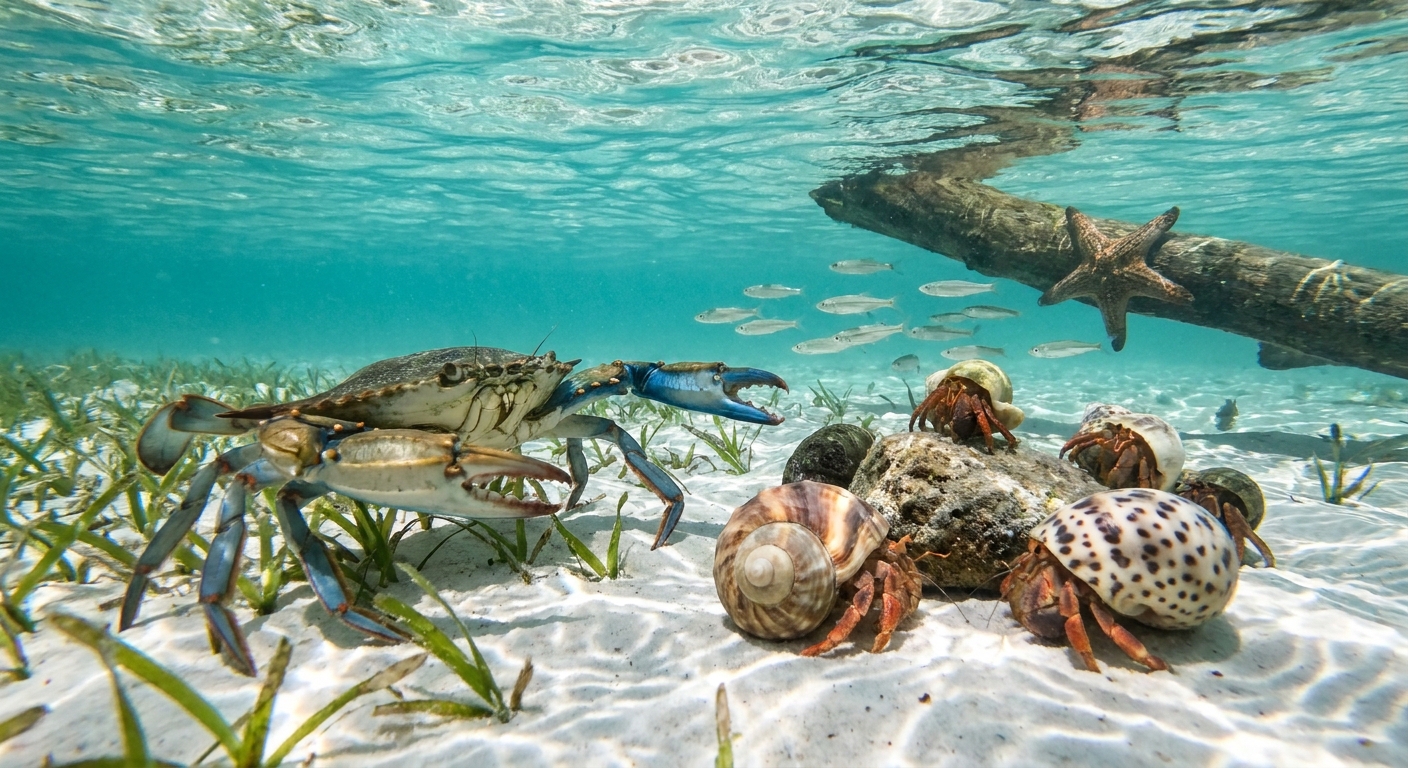
This isn't some sterile aquarium setup. It's wild, messy, and completely alive. The ecosystem here runs on a tight loop—predators hunt, scavengers clean up, and everything feeds something else. You don't need a marine biology degree to appreciate it, but you do need to slow down and actually look. Most visitors float around on inflatables and never realize they're standing in the middle of a working food chain.
Blue Crabs Run the Place
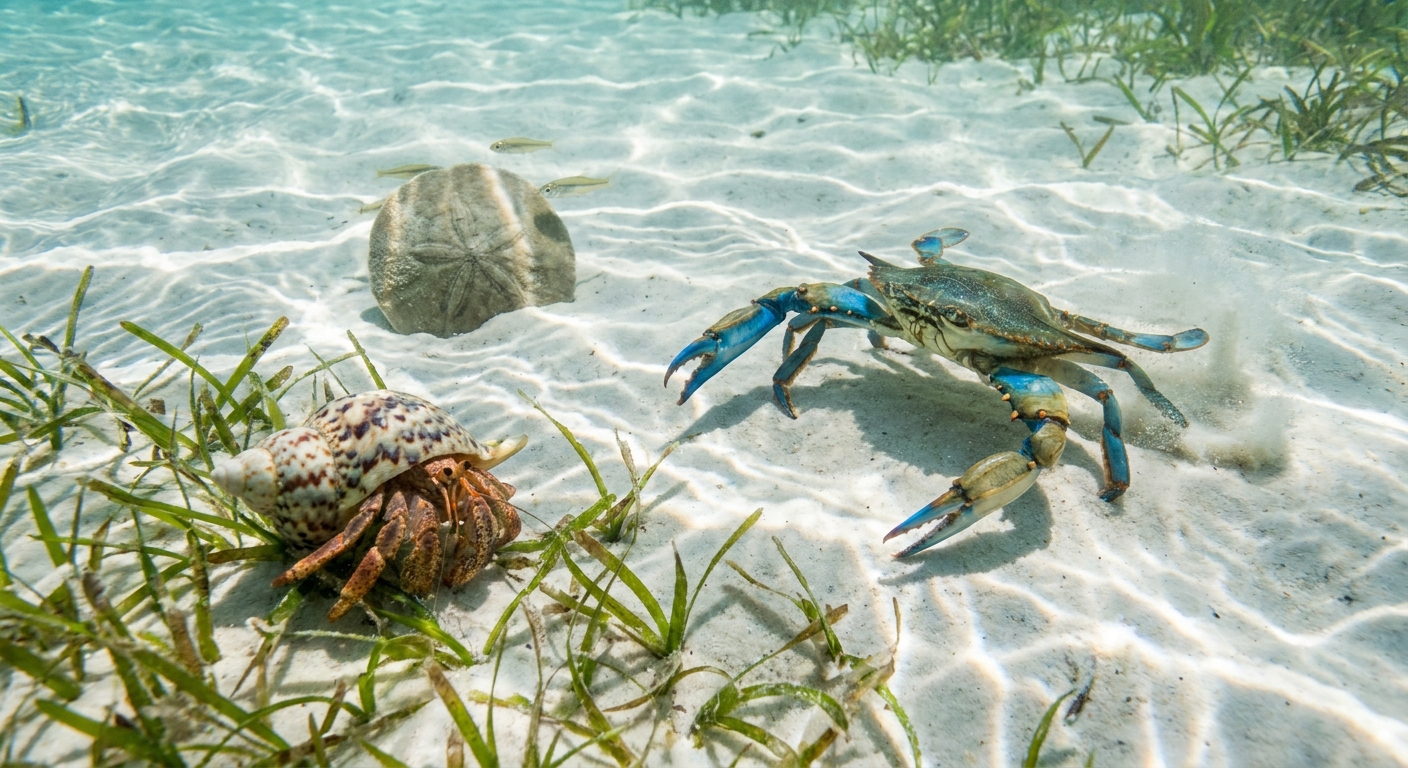
Blue crabs are everywhere at Crab Island, and they're not shy. Those electric-blue claws aren't just for show—they're built to crack shells, tear through baitfish, and defend territory. These crabs move sideways at speeds that surprise most people, especially when you corner one by accident. They're aggressive when they need to be, but they're also smart enough to vanish into the seagrass when a bigger threat rolls in.
We see them most during the warmer months when populations spike and the shallows turn into a crab convention. They're scavengers, hunters, and prey all at once. That's what keeps the system balanced. If you're snorkeling or wading, you'll spot them tucked under patches of grass or bolting across open sand. Kids love chasing them. Adults love watching kids chase them. Either way, they're the main event.
Hermit Crabs Play Musical Chairs
Hermit crabs don't grow their own armor. They borrow it. That means every time they outgrow a shell, they need to find a new one—and they're picky about it. You'll see them lined up, testing shells, swapping them out, or fighting over the good ones. It's survival, but it's also weirdly entertaining. These little guys are scrappy, social, and constantly on the move.
We've watched hermit crabs cluster in groups, foraging together or sizing each other up for shell trades. They're not solitary like you'd think. And they're everywhere at Crab Island, from the tiniest juveniles barely visible in the sand to the chunky adults hauling around spiral shells that look three sizes too big. If you sit still long enough, they'll march right past your feet.
What Else Lives in the Shallows
Blue crabs and hermit crabs get the headlines, but they're not alone. The sandbar's packed with creatures that most people step over without a second thought. Some are buried. Some are camouflaged. Some are just waiting for the current to bring them lunch. Here's what we see on a regular basis:
- Sand dollars buried just under the surface, their flat bodies blending into the bottom until you dig one up by accident
- Starfish clinging to rocks or sliding across the sand, moving slower than you'd expect but covering ground
- Schools of minnows and mullet that scatter the second you get close, flashing silver in the sunlight
- Sea urchins tucked into crevices, their spines fanned out like tiny warning flags
- Jellyfish drifting through when the tide shifts, most harmless but all worth giving space
- Snails and clams half-buried in the sand, quietly filtering water and leaving shells behind for the hermit crabs
The Seagrass Beds Hold Everything Together
Seagrass isn't just decoration. It's infrastructure. Those patchy green mats anchoring the sand are what keep the whole system from washing out. They filter the water, provide cover for smaller fish, and feed everything from crabs to sea turtles. Without seagrass, Crab Island would be a barren flat with nothing to see.
We notice the difference when grass beds get torn up by boats or trampled by crowds. The crabs disappear. The fish move on. The sand shifts. It's a fragile setup that depends on people not treating it like a parking lot. If you're anchoring, avoid the grass. If you're wading, step carefully. It's not complicated, but it matters.
The Food Chain Runs in Real Time
Everything at Crab Island is either eating or being eaten. Blue crabs hunt smaller fish and scavenge whatever sinks. Hermit crabs pick through debris and algae. Starfish pry open clams. Bigger fish cruise the edges looking for minnows. Even the jellyfish are out here catching plankton. It's a tight loop, and every species plays a role.
Most people don't think about this when they're floating on a raft with a cooler full of beer. But it's happening under your feet, all day, every day. The system works because it's been working for thousands of years. Disrupt it—by grabbing crabs, pulling up starfish, or dragging anchors through grass—and you throw off more than you realize.
Respect the System or Wreck It
Crab Island's ecosystem isn't a petting zoo. You can look, you can watch, you can take photos. But leave the animals alone. Don't yank hermit crabs out of the water for a closer look. Don't chase blue crabs into a bucket. Don't collect shells that something's still using. The line between harmless fun and actual harm is thinner than most people think.
We've seen visitors treat the sandbar like a souvenir shop, scooping up everything that moves. That kind of carelessness adds up. One person taking a starfish doesn't wreck the place. A hundred people doing it every weekend does. If you want this spot to stay wild and full of life, act like it.
What You Should Bring
If you're planning to explore the marine life, come prepared. You don't need expensive gear, but you do need the right mindset. Here's what helps:
- Water shoes to protect your feet from shells, urchins, and hidden rocks
- A snorkel or mask to see what's below the surface without disturbing it
- A waterproof camera if you want photos, because pulling your phone out in waist-deep water is a gamble
- Reef-safe sunscreen, since chemical-heavy stuff wrecks the very ecosystem you're there to see
- A mesh bag for trash you find, because leaving garbage behind is the fastest way to ruin a place like this
When the Crowds Show Up
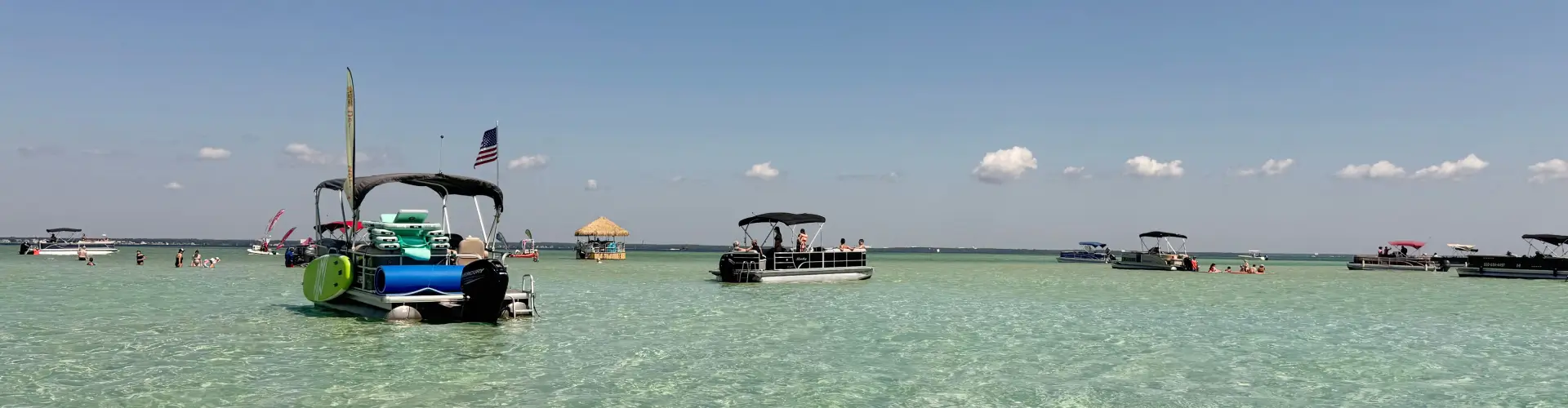
Crab Island gets packed on weekends and holidays. More boats mean more noise, more trash, and more people stepping on things they shouldn't. The marine life doesn't disappear, but it does retreat. If you want the best shot at seeing crabs, starfish, and everything else, go early or visit midweek. The water's clearer, the animals are more active, and you're not fighting a floating party for space.
We've learned that timing matters as much as location. Low tide exposes more of the sandbar and concentrates the wildlife. High tide spreads everything out and makes it harder to spot. Check lower low tides in Destin before you head out, and plan your visit around when the water's at its most interesting.
What the Gulf Decides
You can't control what shows up at Crab Island. The Gulf decides. Some days the water's full of jellyfish. Other days it's nothing but clear sand and a few crabs. Storms stir up the bottom and change the landscape overnight. That's part of what makes it worth visiting. You never know exactly what you're going to find, and that unpredictability keeps it honest.
We've been out there dozens of times on cruises, and no two trips look the same. The seagrass shifts. The crabs move. New shells wash in. It's a living system, not a static exhibit. If you show up expecting a curated experience, you'll be disappointed. But if you're willing to take what the day offers, you'll see something worth remembering.
Why It Still Matters
Crab Island could easily turn into another overdeveloped, overrun tourist trap where the wildlife gets squeezed out by boats and bad behavior. It hasn't happened yet because enough people care to keep it functional. That doesn't mean it's safe. It just means we're still in the window where good decisions can keep it intact.
The blue crabs, hermit crabs, and everything else out there aren't decorations. They're part of a working ecosystem that delivers more value alive than it ever would stuffed in a bucket. If you visit, do it with that in mind. Watch where you step. Leave what you find. And remember that the best souvenir from Crab Island is the memory of seeing it still wild.
If you're planning a trip, consider booking a Destin harbor boat ride or a sunset cruise to experience the area at its best. For more information about what to expect, read what's the weather like in Destin Florida before planning your visit.
Let's Make Your Next Crab Island Adventure Unforgettable
We know how special Crab Island is, and we're here to help you experience its wild side the right way. Whether you want to spot blue crabs, watch hermit crabs on the move, or just soak up the natural beauty, let's plan your perfect day on the water together. Give us a call at 850-749-6117 or book now to reserve your spot and get ready for an up-close look at Destin's most vibrant marine life.
‹ Back
Recent Posts
-
The Average Monthly Water & Air Temps in Destin, Florida
October 5, 2026
-
Blue Crabs, Hermit Crabs & Other Sea Life at Crab Island
September 21, 2026
-

High Tide vs. Low Tide at Crab Island
September 7, 2026
-
-