

By using our website, you agree to the use of cookies as described in our Cookie Policy
What Type of Dolphins are in Destin & What Are Some Fun Facts About Them
Most people hit Destin thinking about beaches and sunsets. Turquoise water, cold drinks, maybe a fishing charter. But there's another reason those Gulf waters feel so alive — and it's swimming just offshore. Dolphins own these shallows, and if you're paying attention, you'll see them. Not once in a while. Constantly. They're not hiding. They're hunting, playing, and putting on a show whether you bought a ticket or not.
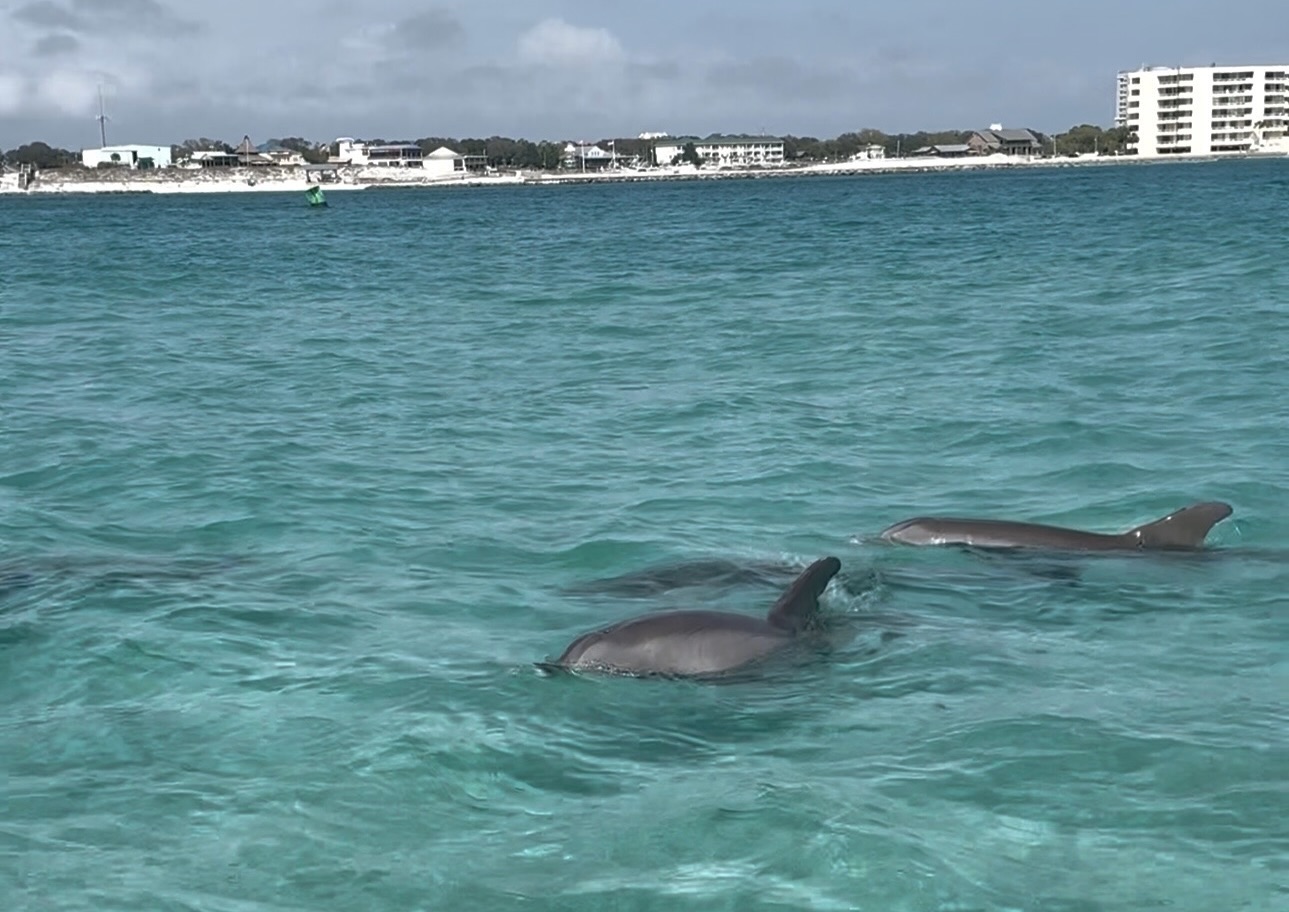
The question isn't whether you'll spot a dolphin in Destin. It's whether you'll recognize what you're looking at when you do. Because these aren't just generic sea mammals — they're bottlenose dolphins, built for this water, wired for this coastline, and more intelligent than most people give them credit for. And if you're going to watch them, you should know what makes them tick.
Bottlenose Dolphins Run These Waters
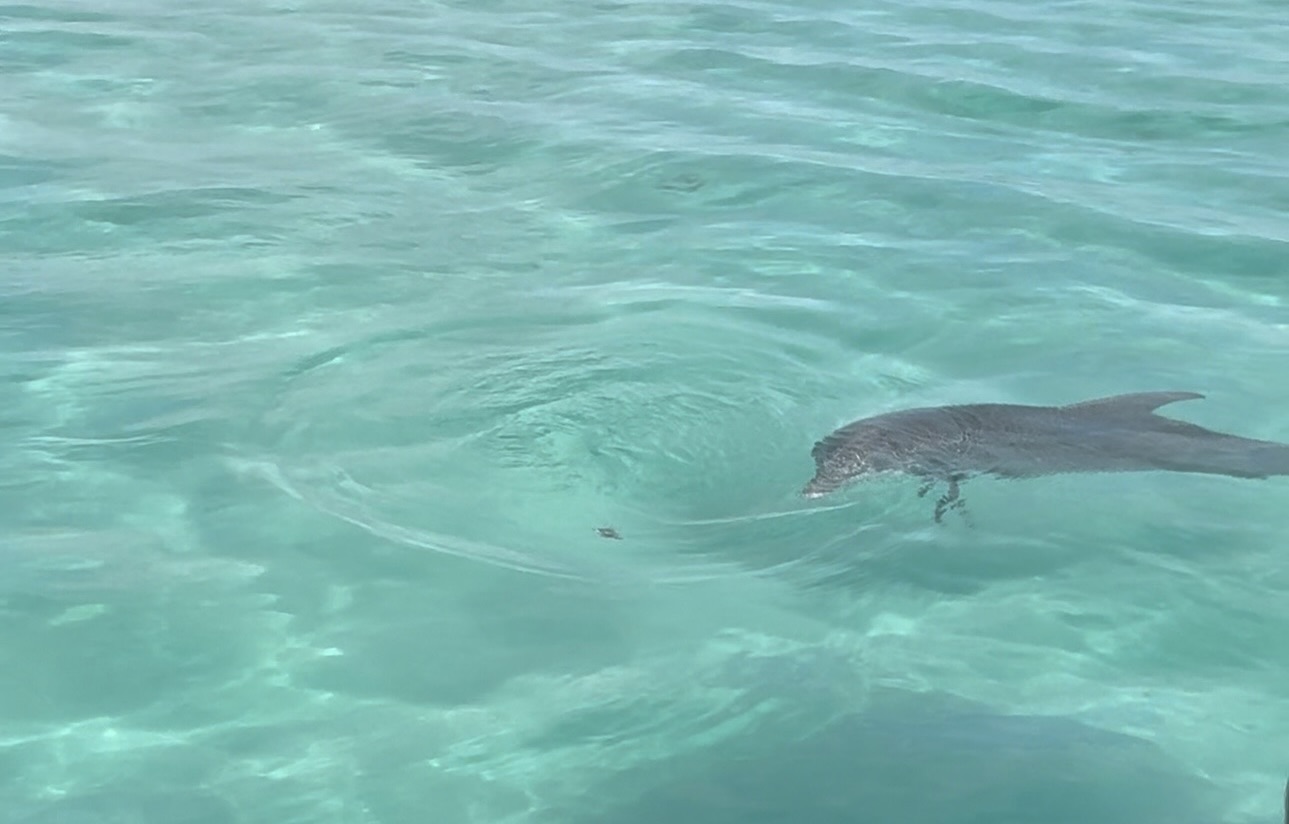
Destin's dolphin population is dominated by one species — the bottlenose. Gray, sleek, unmistakable. You'll know them by the dorsal fin that cuts through the surface and the grin that never quits. They thrive in warm coastal zones, and the Gulf of Mexico checks every box. Shallow bays. Deep channels. Steady baitfish populations. It's prime real estate for a dolphin.
These animals don't just pass through — they live here. Year-round pods patrol the shoreline, riding boat wakes and chasing mullet through the surf. Some hang close to the jetties. Others work the sandbars. A few seem to prefer the harbor traffic, weaving between boats like they're commuting. And unlike other marine mammals that keep their distance, bottlenose dolphins in Destin are bold. They'll surface ten feet from your kayak without flinching.
They Communicate Like We Do
Bottlenose dolphins don't just click and whistle at random. They've got structure. Each dolphin develops a signature whistle early in life — basically a name — and uses it to call out to others in the pod. When they're separated, they'll whistle back and forth until they reconnect. It's not instinct. It's language.
That intelligence shows up in other ways too. They recognize themselves in mirrors. They solve puzzles. They teach their young specific hunting techniques that get passed down through generations. Some pods in Destin have been observed using unique strategies to corral fish against the beach, a behavior that's learned, not hardwired. These animals think. And if you spend enough time watching them, you'll see it.
What Makes Them So Entertaining
Dolphins don't perform for tourists — they perform because they enjoy it. Bow-riding. Tail-slapping. Launching themselves ten feet in the air for no obvious reason. It's not survival behavior. It's play. And bottlenose dolphins in Destin seem to love an audience.
Here's what sets them apart in these waters:
- They surf. Not metaphorically. They ride waves just like boarders do, catching swells and gliding toward shore.
- They toss fish. Sometimes they'll fling a mullet into the air before eating it, possibly to stun it or just for fun.
- They interact with boats constantly, especially fast-moving ones that create wake.
- They breach without warning, sometimes in synchronized groups that look choreographed.
- They investigate objects — buoys, debris, even swimmers — out of sheer curiosity.
Physical Traits That Matter
Bottlenose dolphins aren't just smart — they're built for power. They can hit twenty miles per hour in short bursts, making them one of the fastest creatures in the Gulf. That speed isn't just for show. It's how they hunt, escape predators, and cover serious distance when they need to.
Their bodies are compact but muscular, with smooth skin that reduces drag. The dorsal fin acts as a stabilizer. The tail flukes generate thrust. And their lungs? Efficient enough that a single breath can sustain them underwater for several minutes, though most surface every thirty seconds or so when active.
Key physical characteristics include:
- Adults typically weigh between 300 and 650 pounds
- Length ranges from six to twelve feet, with males slightly larger
- Skin is gray on top, fading to lighter tones on the belly for camouflage
- Their "beak" is short and defined, giving them that iconic profile
- They have 80 to 100 conical teeth designed for gripping, not chewing
How They Hunt and What They Eat
Dolphins in Destin don't hunt alone unless they have to. Most of the time, they work in teams. A pod will circle a school of fish, tightening the formation until the baitfish ball up in panic. Then they take turns darting through the center, grabbing what they can. It's coordinated. It's efficient. And it happens multiple times a day.
Their diet varies depending on what's running, but it's heavy on fish. Mullet. Mackerel. Pinfish. Occasionally squid or shrimp. They don't chew — they swallow prey whole, headfirst to avoid scales catching in their throat. And they eat a lot. An adult bottlenose can consume fifteen to thirty pounds of fish per day, depending on size and activity level.
Social Structure and Pod Behavior
Bottlenose dolphins are rarely solo. They move in pods that range from a handful of individuals to groups of twenty or more. These pods aren't random — they're often made up of related females and their offspring, with males forming separate bachelor groups or drifting between pods.
Bonds within a pod are strong. Mothers stay with calves for years, teaching them how to hunt, navigate, and communicate. Older siblings sometimes help care for younger ones. And when a dolphin is sick or injured, others in the pod will support it at the surface so it can breathe. That's not accidental. It's care.
Pod dynamics worth noting:
- Females give birth every three to six years and nurse for up to two years
- Calves stay with their mothers for three to six years before becoming independent
- Males often form alliances that last for decades
- Pods sometimes merge temporarily, forming superpods of fifty or more dolphins
- Social bonds are reinforced through physical contact — rubbing, touching, synchronized swimming
Lifespan and Threats
In the wild, bottlenose dolphins can live forty to fifty years if conditions are right. Most don't make it that long. Predators like sharks, disease, entanglement in fishing gear, and boat strikes all take a toll. In Destin, boat traffic is heavy, especially during peak season. That means more risk.
Dolphins are resilient, but they're not invincible. Pollution affects their food sources. Noise from engines disrupts their echolocation. And human interaction — feeding, touching, chasing — stresses them out, even when intentions are good. The Marine Mammal Protection Act exists for a reason, and violating it carries serious penalties.
When and Where to See Them
You don't need a tour to spot dolphins in Destin, but it helps. Early morning and late afternoon are peak times, especially near East Pass, Choctawhatchee Bay, and the jetties. If you're on a Destin harbor boat ride, slow down and scan the surface. Dolphins often surface in predictable intervals, and once you spot one dorsal fin, there are usually more nearby.
From shore, look for splashes, fins, or birds diving — dolphins and seabirds often hunt the same schools. Beaches near the harbor see regular pod activity, and the public pier offers a good vantage point without the need for a vessel.
Best viewing conditions:
- Calm water with minimal wind makes fins easier to spot
- Outgoing tides push baitfish toward dolphins waiting near passes
- Early morning light reduces glare on the water
- Areas with boat traffic attract dolphins that like to ride wakes
- Sandbars and drop-offs are natural feeding zones
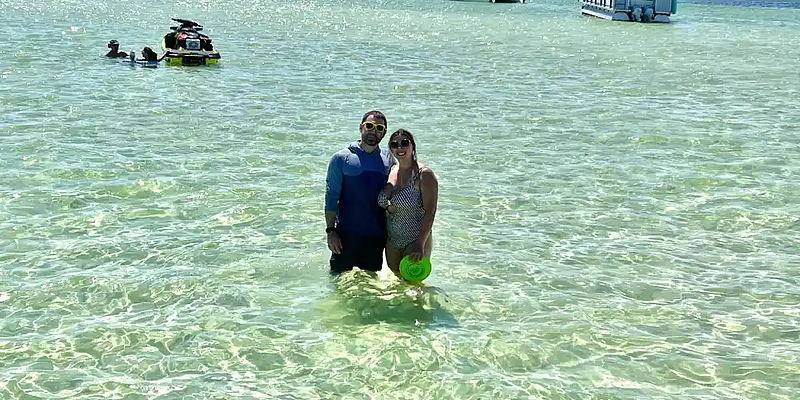
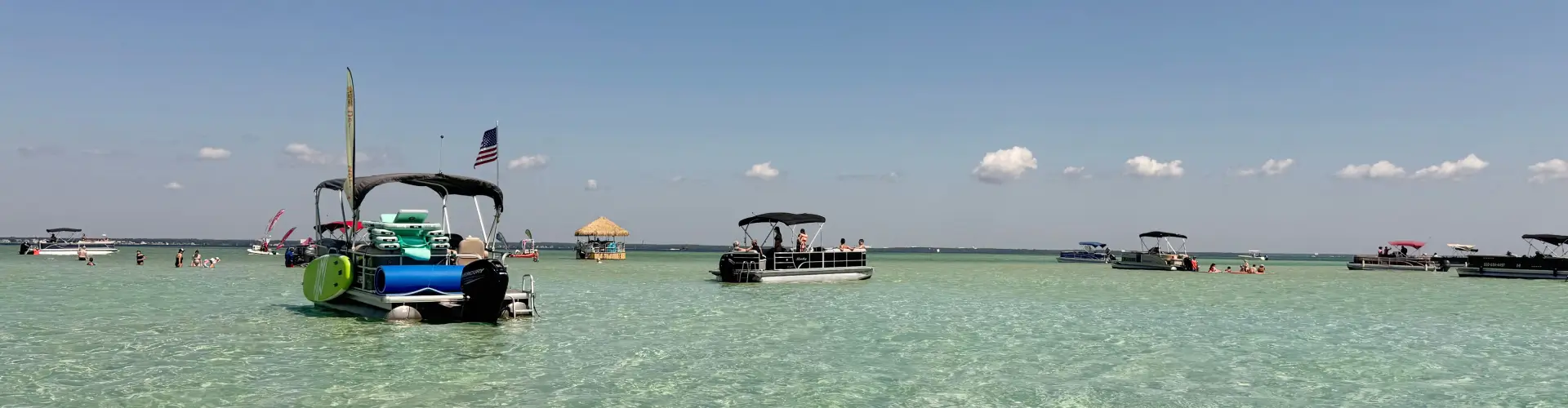
One of the most popular spots to encounter dolphins up close is during Crab Island excursions, where pods frequently patrol the shallow sandbars. Many visitors on a sunset cruise also witness dolphin activity as the light fades and feeding intensifies. If you're planning a trip and want to learn more about conditions and timing, check out details on what's the weather like in Destin Florida. For those interested in understanding the sandbar environment better, reading about why Crab Island looks different during tidal shifts can add valuable context to your dolphin-watching experience.
Respect Keeps Them Around
Dolphins don't need us. We need them — for tourism, for ecosystem health, for the simple fact that they make this coast feel more alive. That means keeping distance. No feeding. No touching. No chasing with boats or paddleboards. Federal law requires staying at least fifty yards away, and for good reason. Stress changes behavior. Behavior changes survival.
If a dolphin approaches you, enjoy it. But don't reach out. Don't toss food. Don't try to make it happen twice. These animals have been here longer than any of us, and they'll be here longer still — but only if we let them live on their terms, not ours.
Ready to See Dolphins Up Close?
There's nothing quite like watching dolphins in their natural habitat, and Destin offers some of the best opportunities to do just that. If you're as excited as we are to experience these incredible animals firsthand, let's make it happen together. Give us a call at 850-749-6117 or book now to reserve your spot for an unforgettable dolphin encounter on the water.
‹ Back
Recent Posts
-
The Average Monthly Water & Air Temps in Destin, Florida
October 5, 2026
-
Blue Crabs, Hermit Crabs & Other Sea Life at Crab Island
September 21, 2026
-

High Tide vs. Low Tide at Crab Island
September 7, 2026
-
-